


Slow extraction. Natural purity. Real everyday oil.
Most kitchen oils look similar in a bottle, but the way they’re made is completely different. Wood-pressed oils are closer to real food; highly refined oils are closer to an industrial ingredient. This page explains why we chose the slow, wood-pressed route for YouandHealth – and how to use these oils well in an Indian kitchen.
What Happens to Regular Refined Oils?
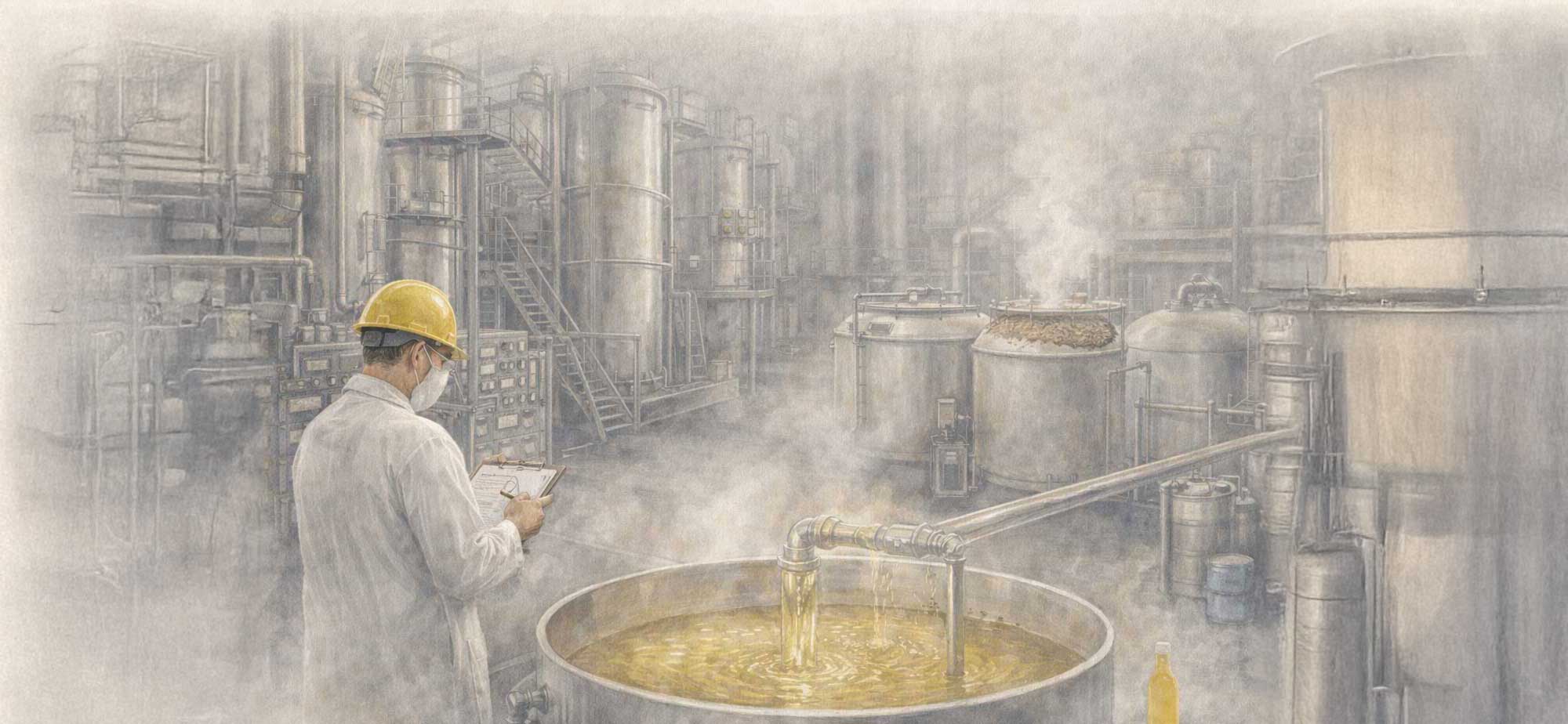
To make “refined” or “refined, bleached, deodorised (RBD)” oils, large plants typically follow several high-tech steps:
Degumming & neutralising
Crude edible oil is treated with water/acid and alkali to strip out gums and free fatty acids.
Bleaching
The oil is heated and mixed with clays/adsorbents to remove pigments and trace metals.
Deodorisation at very high heat
Steam is passed through the oil at around 220–260°C under vacuum to remove odours and flavours.
These processes make the oil neutral in taste, very clear and stable, but they also:
- Expose the oil to very high temperatures for long periods, which can reduce heat-sensitive nutrients like natural vitamin E (tocopherols).
- Strip away the original aroma, flavor and character of the seed or nut.
- Often require additives and anti-foaming agents later in the chain to improve shelf life or frying performance (depending on the brand).Strip away the original aroma, flavor and character of the seed or nut.
Refined oils work for industrial frying and ultra-processed foods – but that’s not how we cook at home.
What “Wood-Pressed” Means at YouandHealth

At YouandHealth, we use small wooden ghana / low-RPM wood-press machines instead of high-speed expellers and chemical refining.
Low RPM pressing
Seeds are crushed slowly so friction and heat stay low; the oil typically stays below ~45–50°C during pressing (no external heating).
No chemical refining
We don’t do degumming, neutralizing, bleaching or deodorizing.
Simple settling & filtering
The oil is allowed to rest so natural sediments settle, then passed through basic food-grade filters. No de-odourisers, no de-colourisers.
Batch-wise cleaning & checks
Each batch is cleaned, tasted and checked in our small FSSAI-licensed unit before packing
You get oil that is much closer to what comes out of the seed – in colour, aroma and nutrition.
What You Gain with Wood-Pressed Oils

- More of the natural antioxidants (like vitamin E and polyphenols) are retained.
- The natural fatty-acid profile of each seed- such as monounsaturated fats in groundnut and lauric acid in coconut – stays intact.
- You get the real aroma and flavour of groundnut, coconut, sesame or mustard in your food, instead of a flat, neutral oil.
- No chemical solvents, de-foaming agents, artificial flavors or colors are used in our process.
- No blending with cheaper refined oils.
- Only food-grade packaging – suited to oils, with clear labelling
- Cold-pressed oils can be heated, but they’re more sensitive to very high heat because they still contain natural antioxidants and delicate compounds. Overheating can reduce these nutrients and may promote off-flavours or harmful breakdown products.
Wood-Pressed vs Refined – At a Glance
| Question | Cold-Pressed YouandHealth Oils | Typical Refined Oil |
|---|---|---|
| How are they made? | Slow mechanical pressing, natural settling & simple filtration | Multi-step refining: degumming, neutralising, bleaching, deodorising at ~220–260°C |
| Chemicals used? | None in processing | Alkali, acids, bleaching earths; may use additives later |
| Aroma & flavour | Distinct – you can smell & taste the seed/nut | Neutral or “refined” taste |
| Nutrient retention | Higher – more natural antioxidants & delicate compounds kept | Some heat-sensitive nutrients reduced by high-temperature processing |
How to Switch Your Kitchen to Wood-Pressed Oils
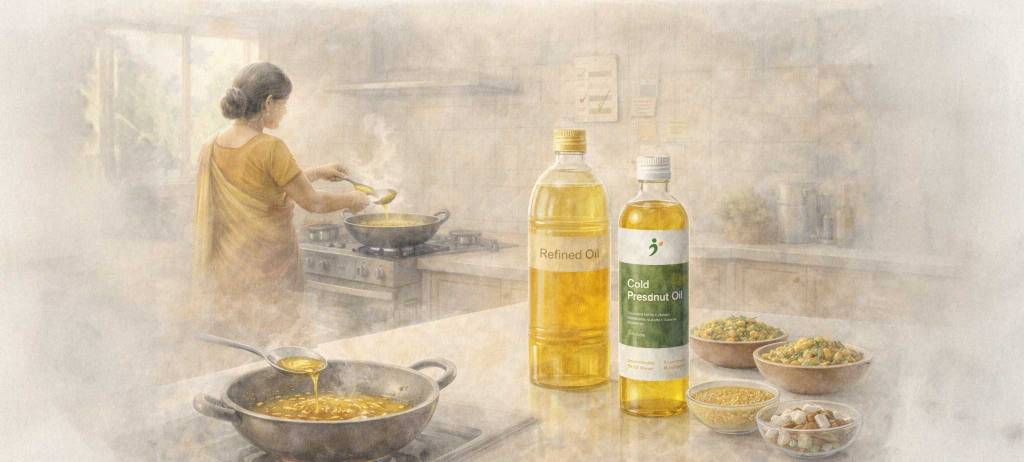
If you currently cook only with refined oil, shifting everything overnight can feel big. A simple path:
- Start with one oil – e.g., YouandHealth Groundnut or Coconut – and use it for all tadkas and sautés.
- Keep refined oil only for occasional deep-fries (if you still need it), but avoid re-using the same oil many times.
- Gradually move more dishes – dal, sabzi, sambar, stir-fries – to cold-pressed.
In Short
Wood-pressed oils are not just a trend; they’re a return to slower, simpler oil making – closer to what traditional ghana units and bull-driven presses have done for generations. By avoiding high-heat refining and unnecessary chemicals, they give your kitchen:
- Cleaner ingredients
More natural nutrition
- Real, honest flavour
That’s why every YouandHealth bottle is wood-pressed, small-batch and clearly labelled – so you always know what you’re pouring into your pan.
YouandHealth’s Wood-Pressed Promise
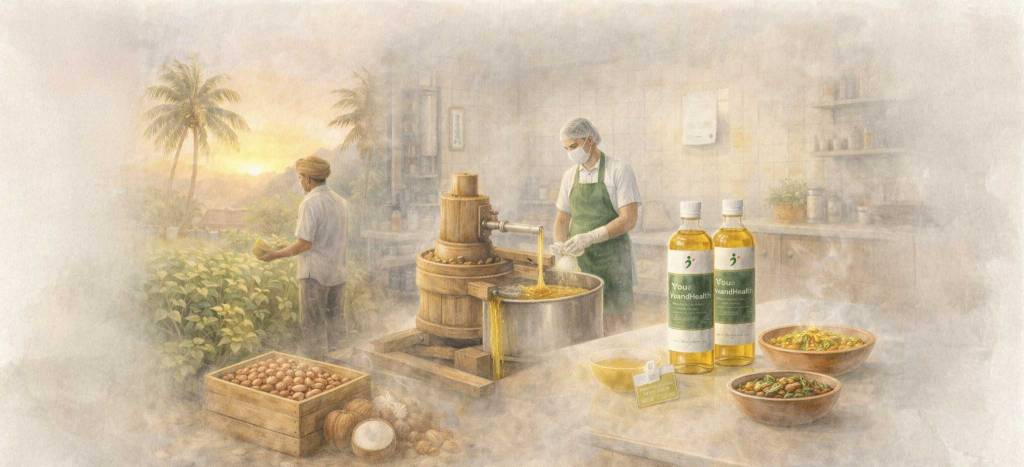
- Seeds and nuts sourced from trusted farms and growers
- Small-batch wood pressing at low RPM
- No solvent extraction, no blending with cheaper oils
- Clear, honest labelling with batch details and best-before dates
Wood-pressed oil won’t change your life overnight – but it can quietly change how your kitchen feels: warmer, more aromatic and a little more real.